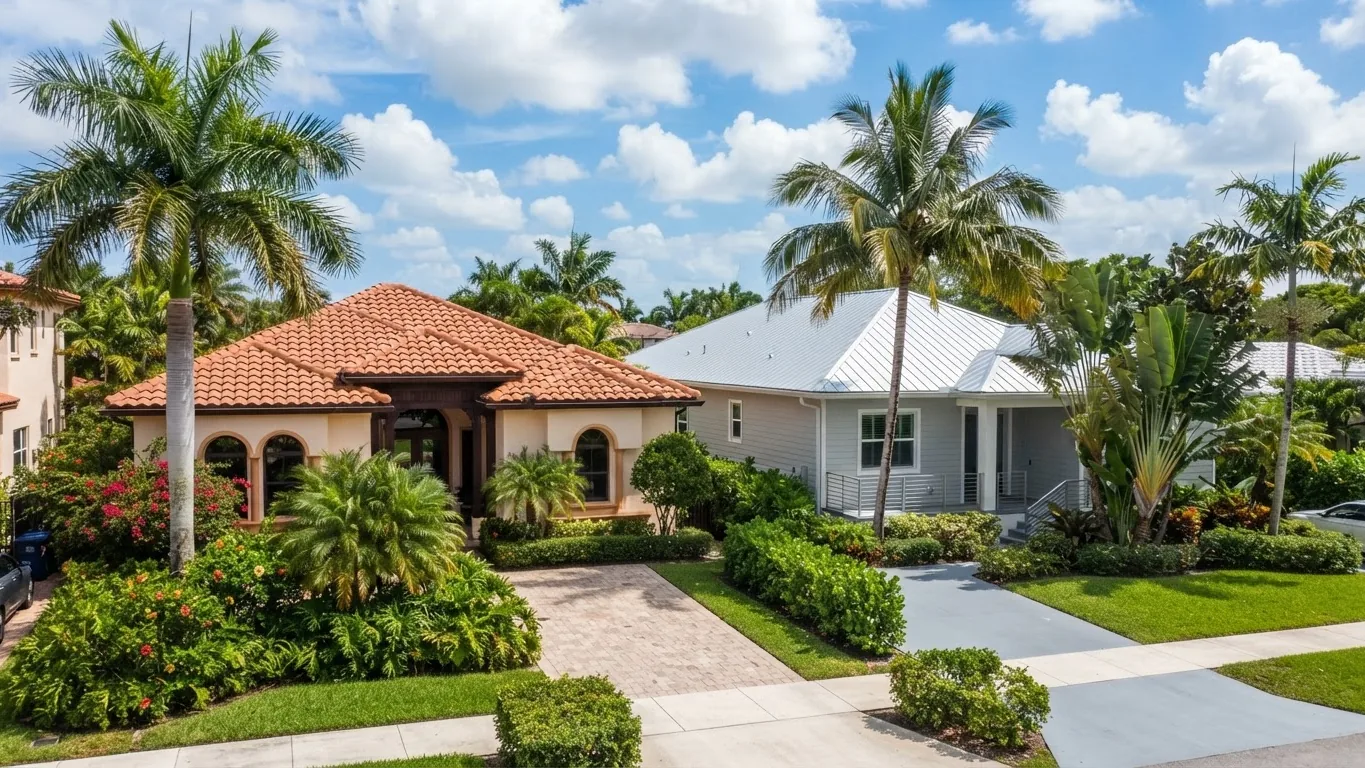
Tile and metal are the two premium roofing choices South Florida homeowners weigh most often. Both handle hurricanes far better than basic shingles, both last for decades, and both cost more upfront - which is exactly why the decision deserves real thought. The right answer depends on your home's structure, your budget, how long you plan to stay, and how much weight you give to looks versus low maintenance. This guide compares tile and metal roofs head-to-head for the Miami-Dade, Broward and Palm Beach climate.
Why this choice matters more in South Florida
A roof in South Florida works harder than almost anywhere else in the country. It takes months of intense UV, daily summer downpours, salt-laden air near the coast, and the annual threat of hurricane-force winds. Miami-Dade and Broward sit in the High-Velocity Hurricane Zone (HVHZ), which means any new roof must meet some of the strictest wind and impact standards in the U.S. Tile and metal both meet those standards when properly installed - but they get there differently, and they age differently.
Tile roofs: strengths and trade-offs
Concrete and clay tile are the classic South Florida look, and for good reason - tile handles sun and heat exceptionally well and can protect a home for decades when the underlayment is maintained.
- Excellent lifespan - clay and concrete tile often outlast most other materials when properly maintained
- Superb heat performance - tile's thermal mass and air gap help keep attics cooler
- Classic Mediterranean and Spanish styling that suits many South Florida neighborhoods
- Very heavy - your roof structure must be engineered for the load, especially on older homes
- The waterproofing layer underneath typically needs replacement long before the tiles themselves wear out
Metal roofs: strengths and trade-offs
Standing-seam and metal panel roofs have surged in popularity across Florida because they combine long service life with outstanding wind performance and low upkeep.
- Strong hurricane performance - properly fastened standing-seam systems carry high wind ratings
- Lightweight - suitable for most existing structures without reinforcement
- Reflective coatings bounce heat away, which can help with cooling costs
- Low maintenance - no cracked tiles to replace after a storm or a walk on the roof
- Fewer style options than tile, and hail or falling branches can dent panels
Cost: what actually drives the price
Both tile and metal cost noticeably more than asphalt shingles, and in most South Florida projects they land in a broadly similar premium range - the final number varies with the specific product and the home. What moves the price most:
- Roof size, pitch and complexity - hips, valleys and multiple levels add labor
- Structural work - tile may require engineering review or reinforcement on older homes
- Material grade - designer clay tile and thick-gauge standing-seam metal sit at the top of the range
- Tear-off and disposal of the existing roof
- Permits and HVHZ-rated components required in Miami-Dade and Broward
Because so much depends on the individual home, treat any figure you see online as a starting point and get an itemized written estimate for your actual roof.
Hurricanes, wind ratings and insurance
Wind performance is where both materials earn their keep. Metal systems are mechanically seamed and fastened directly to the deck, giving them excellent uplift resistance. Tile systems achieve strong ratings too, though individual tiles can crack or dislodge under flying debris and need replacement after a major storm.
Either roof, installed to current code with a documented wind mitigation inspection, may help reduce the windstorm portion of your homeowner's insurance premium. Savings vary by insurer and home, so ask your agent what credits apply before you choose - and keep every permit and inspection record from the project.
Heat, salt air and long-term maintenance
In Florida's climate the less obvious factors often decide the winner. Near the ocean, salt air is hard on exposed fasteners and untreated metals, so coastal homes need aluminum or properly coated steel systems. Tile shrugs off salt air but requires periodic underlayment work, and walking on a tile roof - by an AC tech or a pressure-washing crew - is a common cause of cracked tiles. Metal needs little routine care beyond keeping debris out of seams and checking fasteners after storms.
So which is right for your home?
Choose tile if you love the look, your structure can carry the weight, and you are comfortable budgeting for underlayment renewal down the road. Choose metal if you want the lightest, lowest-maintenance long-life roof with top-tier wind performance - especially near the coast. Homes in HOA communities should also confirm which materials and colors are approved before signing a contract.
Getting started
The honest answer to tile versus metal is: it depends on your specific roof, and a proper evaluation beats any general guide. Renomatix connects South Florida homeowners with licensed, insured roofing professionals who work in Miami-Dade, Broward and Palm Beach every day. Request a free, no-obligation consultation - we will assess your structure, walk you through material options and provide a clear written estimate, with financing options available for qualifying homeowners.