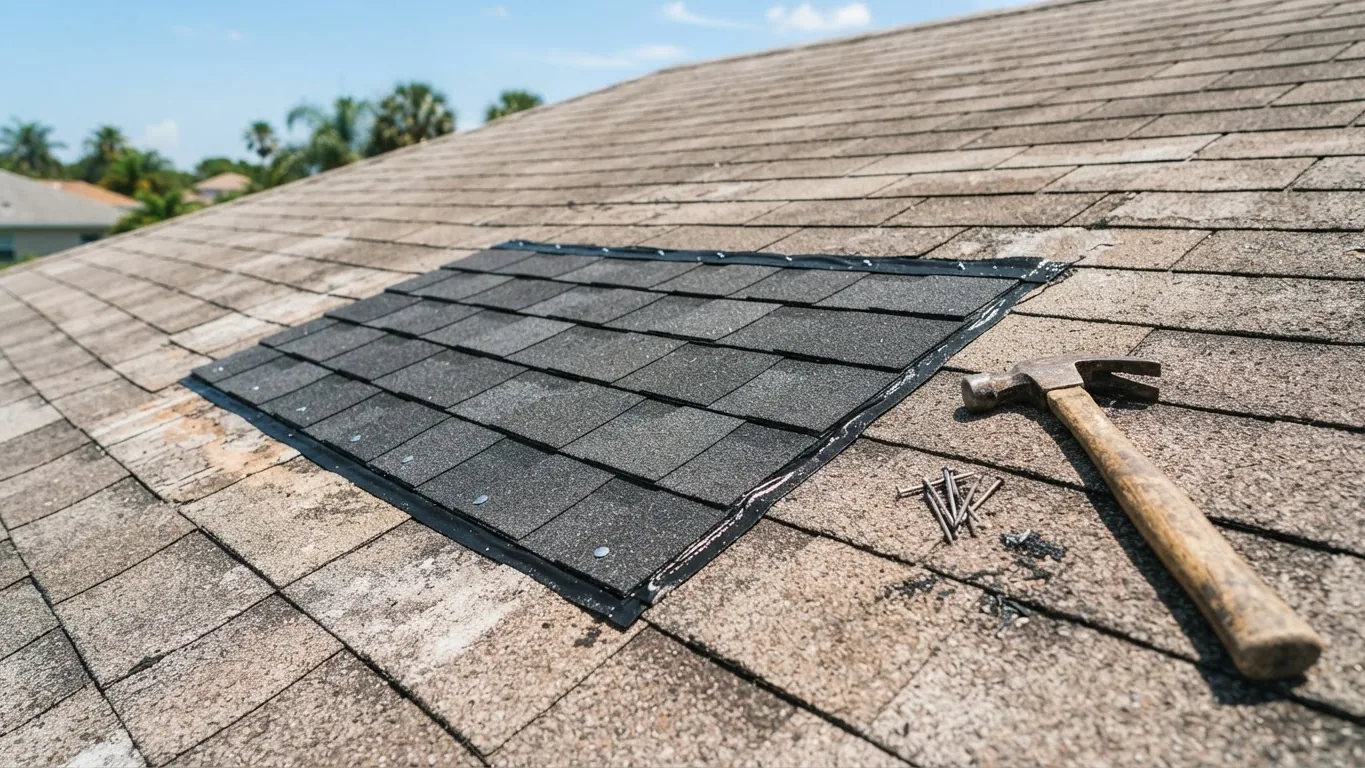
A roof leak or a few missing shingles after a summer storm forces the same question on nearly every South Florida homeowner: is this a quick fix, or is it time for a whole new roof? The right answer depends on more than the size of the problem in front of you. Age, roofing material, the extent of hidden damage, your insurance situation, and the relentless Miami-Dade and Broward climate all play a part. This guide walks through how to weigh a repair against a replacement so you can make a confident, informed decision.
Repair or replace: how to think about it
At its simplest, a repair fixes a specific, contained problem while the rest of the roof still has useful life left. A replacement makes sense when the roof is near the end of its lifespan, when damage is widespread, or when repeated repairs are no longer cost-effective. The goal is not to spend the least money today - it is to get the most reliable protection for the longest time at a sensible cost.
Before deciding, it helps to have a licensed roofer inspect the full roof, not just the visible trouble spot. Water travels, and a stain on your ceiling is often several feet from where the roof actually failed.
When a roof repair makes sense
If your roof is relatively young and the damage is isolated, a targeted repair is usually the practical choice. Repairs tend to be the right call when:
- The roof is well within its expected lifespan and otherwise sound
- Damage is limited to a small area, such as a few shingles or a single flashing point
- There are no signs of widespread leaks, sagging, or rot in the decking
- A storm caused localized damage rather than affecting the whole surface
- You are addressing a clear, single source of a leak
When roof replacement is the smarter choice
Sometimes patching is just delaying the inevitable and adding cost along the way. Replacement often becomes the better investment when:
- The roof is at or past its typical service life for its material
- You are dealing with multiple leaks or damage spread across large sections
- The decking underneath is soft, rotted, or water-damaged
- You have already paid for several repairs in a short span
- An insurer or inspector has flagged the roof as near end-of-life
What South Florida's climate does to roofs
Few places test a roof like South Florida. Intense UV exposure, months of heat and humidity, heavy summer downpours, salt air near the coast, and hurricane season together age roofing materials faster than in milder regions. Shingles can become brittle, tiles can crack, and sealants and flashing break down sooner.
This is why a roof here may need attention earlier than the same product would elsewhere, and why a professional assessment matters. A roof that looks fine from the street can be quietly deteriorating under constant sun and moisture.
How age and roofing material factor in
Material and age are two of the biggest signals. Asphalt shingles generally have a shorter service life than tile or metal, and a roof approaching the upper end of its expected range is a stronger candidate for replacement even if today's damage looks minor. Tile and metal roofs can last significantly longer, but their repairs can be more specialized.
A good rule of thumb: if your roof is young, lean toward repair; if it is aging and you are facing a meaningful repair bill, get a replacement quote too so you can compare the long-term value rather than just the cheapest option today.
Insurance, permits, and code in Miami-Dade and Broward
Roofing in South Florida is tightly tied to insurance and code. Insurers increasingly scrutinize roof age and condition, and an older roof can affect coverage or renewals. A newer, code-compliant roof - sometimes paired with a wind mitigation inspection - may help with insurability and premium credits, though actual results vary by insurer and policy.
Both Miami-Dade and Broward enforce strict building codes, and roof work typically requires a permit and a final inspection. Beyond a threshold of storm damage, code can require more than a patch. A licensed local contractor handles permitting, uses approved materials, and makes sure the work will pass inspection and perform in a storm.
Weighing cost against long-term value
A repair almost always costs less up front than a full replacement, but the cheapest option is not always the best value. If you spend on repeated repairs for an aging roof, those costs add up - and you still face replacement eventually. Roofing prices vary widely based on material, roof size, pitch, and the extent of any hidden damage, so treat online figures as rough ranges rather than quotes.
Because a new roof is a significant investment, many homeowners look at financing. Renomatix works with qualifying homeowners on flexible, no-upfront-cost financing options; Renomatix is an independent home-improvement company and is not affiliated with any government agency or program. Always review the full terms so you understand the real long-term cost before you commit.
Getting started
The clearest next step is a professional roof inspection. A licensed South Florida roofer can tell you honestly whether a repair will hold or whether replacement is the wiser move, walk you through material and code requirements in your city, and give you a written estimate for each path so you can compare.
Renomatix offers a free, no-obligation consultation for homeowners across Miami-Dade and Broward. You will get a straight assessment of your roof's condition and your options - so you can decide on your own timeline, with approved materials, proper permitting, and financing details in hand.