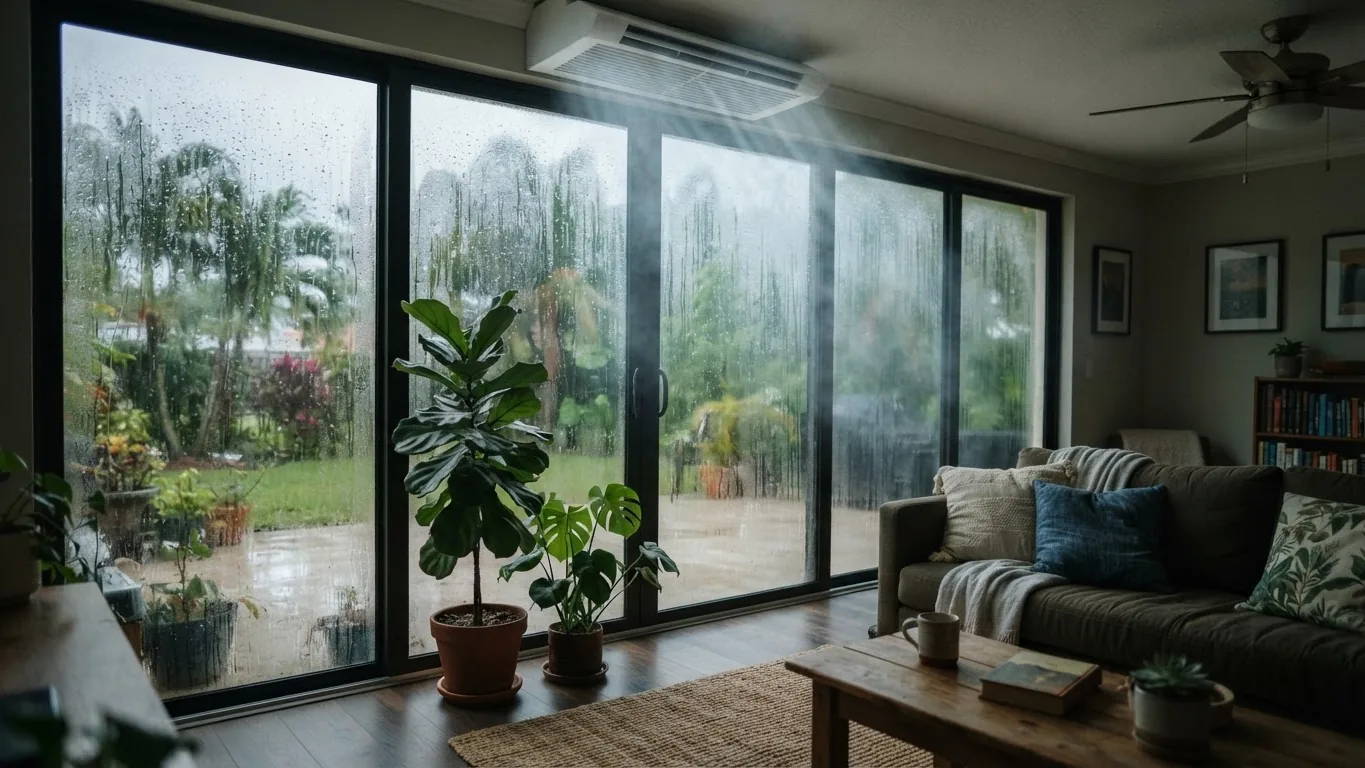
It is one of the strangest complaints in South Florida homes: the thermostat reads 73°F, the air coming out of the vents is genuinely cold, and the house still feels damp. Windows fog. Doors stick. There is a musty smell in the closets that never quite goes away. Homeowners in Broward and Miami-Dade often assume the fix is a bigger air conditioner. In most cases, a system that is too big is exactly what caused the problem.
Cooling and dehumidifying are two different jobs
An air conditioner does two things at once. It lowers the temperature of the air (sensible cooling), and it pulls moisture out of the air (latent cooling). Those two jobs happen at different speeds.
Temperature drops fast. Moisture removal is slow - it only happens while the indoor coil is cold and wet and air is passing over it long enough for water to condense and drain away. In a dry climate that hardly matters. In South Florida, where outdoor dew points sit in the mid-70s for months at a time, the moisture job is arguably the more important one.
An oversized system satisfies the thermostat before it has spent much time removing water. It hits the set temperature, shuts off, and the moisture stays in the house.
Short cycling: the symptom that gives it away
A correctly sized system in July should run in long, steady cycles - often 15 to 20 minutes or more at a time, and close to continuously in the worst afternoon heat. That is normal and it is what you want.
An oversized system does the opposite. Watch for:
- Cycles that start and stop every 5-10 minutes on a hot afternoon
- The house cooling down very quickly, then feeling clammy within the hour
- Indoor humidity readings above 60% even when the thermostat is satisfied
- Condensation on supply vents, window frames, or the inside of exterior walls
- A musty smell in closets, behind furniture, or near the air handler
A cheap hygrometer (under $20) settles the question. Put one in the main living area. In a South Florida home the target range is roughly 45-55% relative humidity. Consistently over 60% with the AC running fine is the classic oversized-system signature.
Why so many South Florida systems are oversized
There are a few reasons this happens so often here:
- Rule-of-thumb sizing. The old shortcut - one ton per 500 or 600 square feet - ignores insulation, windows, orientation, ductwork and air leakage entirely
- Like-for-like replacement. The outgoing unit was oversized, so the new one is matched to it and the error is copied forward
- Impact windows and a new roof changed the math. Homes across Broward and Miami-Dade have added impact glazing and better roofing over the last decade. Those upgrades genuinely reduce the cooling load, which means the house may now need less tonnage than it did before
- Fear of a callback. Undersized is an obvious complaint. Oversized is a vague one, so oversizing is the safer commercial choice for a contractor
That third point matters more than most homeowners realise. If you installed impact windows and then replaced the AC with the same tonnage you had in 2012, there is a fair chance the new system is too big for the house you have now.
What a proper load calculation looks like
The industry standard is a Manual J load calculation, and Florida energy code compliance for HVAC changeouts and new construction is built around documented sizing rather than a rule of thumb. A real Manual J accounts for:
- Conditioned square footage, ceiling heights and floor plan
- Window area, glazing type and which direction each elevation faces - a west-facing wall of glass in Hollywood is a very different load from the same glass facing north
- Insulation levels in the attic and walls, and whether the attic is vented
- Duct location and leakage - ducts in a hot Florida attic can add a substantial load by themselves
- Occupancy, appliances, and the local design temperature and dew point
Ask any contractor quoting you a system: will you perform a Manual J, and can I see the output? A contractor who answers with square footage and a tonnage number has not done the calculation. This one question separates a serious quote from a guess, and it costs you nothing to ask.
Variable-speed equipment changes the conversation
Single-stage equipment has one speed: full blast or off. That is what makes oversizing so punishing - there is no gentle setting.
Two-stage and variable-speed (inverter) systems can run at a fraction of capacity for long stretches, which is much better for moisture removal in a humid climate. They cost more up front and typically carry higher repair costs later, so they are not automatically the right answer.
The important point is this: variable-speed equipment tolerates sizing error better, but it does not excuse it. A grossly oversized inverter system will still spend too much time at a capacity your house does not need. Size it correctly first, then choose the equipment type.
Other things that cause a cold, clammy house
Oversizing is the most common cause, but not the only one. Before replacing equipment, it is worth ruling out:
- Duct leakage. Leaky return ducts in a hot attic pull in humid attic air continuously - you are air conditioning the attic and importing its moisture
- Blower speed set too high. Air moving too fast across the coil does not dwell long enough to condense water. This is often adjustable
- An oversized or dirty coil, or low refrigerant charge. Either can wreck dehumidification performance
- The thermostat fan set to ON instead of AUTO. With the fan running constantly, water that condensed on the coil gets re-evaporated and blown back into the house. This single setting fixes a surprising number of humidity complaints
- Bathroom and kitchen exhaust fans that are not actually vented outside, or a dryer venting into a garage
That fan setting is worth checking tonight. It is free, and if your thermostat has been on ON for years it may be a meaningful part of the problem.
What it typically costs to fix
What you spend depends entirely on which problem you actually have:
- Thermostat fan setting and filter changes - free to a few dollars
- Blower speed adjustment during a service call - often included in a standard tune-up
- Duct sealing or partial duct replacement - a common mid-range project, priced by the extent of the ductwork
- A whole-home dehumidifier tied into the ductwork - a targeted fix when the equipment is otherwise sound
- Right-sized system replacement - the largest option, and the one that finally resolves genuine oversizing
These are typical market ranges of work, not a quote. Actual pricing in Broward and Miami-Dade varies with equipment type, attic access, duct condition and permit requirements, and the only way to know your number is to have licensed contractors look at the house. Note also that HVAC changeouts here generally require a permit and inspection - a quote that skips the permit is not saving you money, it is creating a problem for your next home sale.
Getting started
If your house is cold and humid at the same time, work through it in order. Check the thermostat fan setting tonight. Put a hygrometer in the living area for a week. Time the cycles on a hot afternoon. That costs nothing and tells you a great deal before anyone quotes you anything.
When you are ready for professional eyes on it, ask for more than a tonnage number. A quote worth taking seriously will include a load calculation, an assessment of the ductwork, and a permit plan. Getting two or three of those side by side is the only reliable way to tell whether you need a repair, a duct fix, a dehumidifier, or a right-sized replacement.
One free request puts you in front of licensed contractors in our network who work Broward and Miami-Dade. You get free, no-obligation quotes, you compare them yourself, and you decide - or you walk away. You can verify any Florida license at myfloridalicense.com before you sign anything.