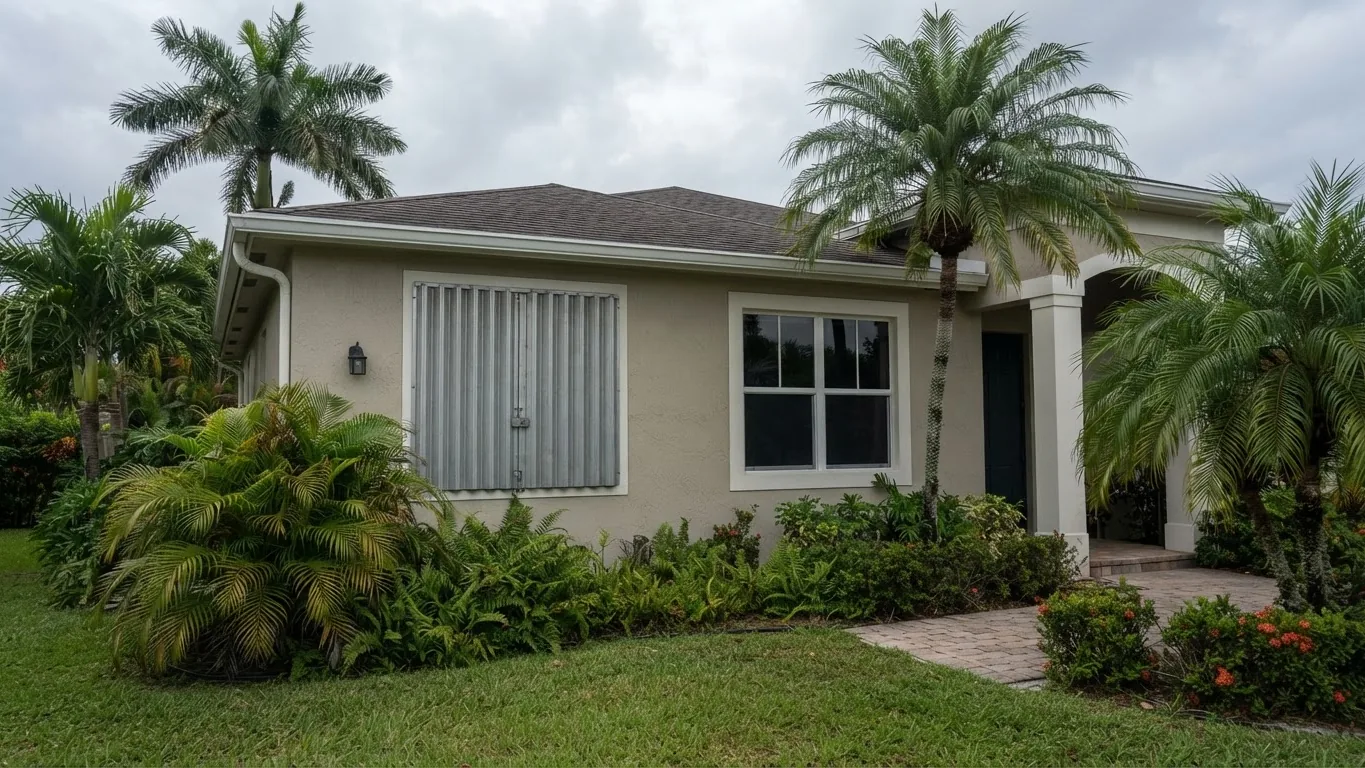
When hurricane season arrives in South Florida, every homeowner faces the same question: how do you protect your windows and doors from wind-borne debris? The two most common answers are impact-resistant windows and hurricane shutters. Both meet Miami-Dade and Broward code, but they work very differently and suit different budgets and lifestyles. This guide breaks down how each option performs, what it costs, and how to decide which is right for your home.
How each option protects your home
Both impact windows and shutters exist to do one job well: keep the building envelope sealed during a storm. If a window breaks and wind gets inside, the pressure can lift a roof or blow out walls, so this protection is about far more than broken glass.
Impact windows are permanent units with a laminated glass layer and a reinforced frame that stay in place year-round. Hurricane shutters are a separate barrier - accordion, roll-down, panel, or fabric - that you close over ordinary windows when a storm approaches. One is always ready; the other has to be deployed.
Impact windows: the pros and cons
Impact windows are engineered to take a hit from flying debris and hold together even if the glass cracks. Because they are always installed, there is nothing to put up when a warning is issued - a real advantage if a storm forms quickly or you are away from home.
Their benefits go beyond storms, but so do the trade-offs:
- Always-on protection with no setup before a storm
- Year-round noise reduction and better energy efficiency from the sealed, insulated glass
- Added security against break-ins, since the laminated glass is hard to shatter
- UV protection that helps reduce fading of floors and furniture
- Higher upfront cost than most shutter systems, and a bigger installation project
For many South Florida homeowners the everyday benefits - quieter rooms, lower cooling bills, and one less storm chore - are what tip the decision, not just the storm rating.
Hurricane shutters: the pros and cons
Shutters are a proven, code-compliant way to protect existing windows without replacing them, and they usually cost less up front. They come in several styles, from budget removable panels to convenient motorized roll-downs.
The main considerations with shutters are convenience and effort:
- Lower initial cost than a full impact-window replacement, especially panels
- Roll-down and accordion styles deploy quickly; panels must be stored and installed by hand
- No year-round energy or noise benefit, since they only help when closed
- You must be home and able to close them before a storm hits
- Some styles block light and views when deployed
Shutters make a lot of sense when you want storm protection on a tighter budget, or when replacing every window at once is not practical right now.
Cost: what really drives the price
There is no single price for either option because so much depends on the number and size of your openings, the product tier, and your home's construction. Impact windows are a larger investment because you are replacing the entire window, frame and glass. Shutters range widely - basic panels sit at the low end, while custom motorized roll-downs approach the cost of some impact systems.
Rather than chase online averages, it is more useful to compare full quotes for your specific home. Ask each contractor to price the complete job, including permits, installation, and any needed structural work, so you are comparing like for like.
Insurance and wind mitigation
In Florida, approved storm protection can qualify homeowners for wind mitigation insurance credits, and both impact windows and code-approved shutters may count. The exact savings depend on your insurer, your policy, and a wind mitigation inspection of your home.
Programs such as My Safe Florida Home have also offered inspections and grants tied to hardening a home against storms, though availability and funding change over time. Renomatix is an independent home-improvement company and is not affiliated with any government agency or program, so always confirm current eligibility and credits directly with your insurer and the program before counting on them.
Permits, code, and professional installation
Miami-Dade and Broward have some of the strictest building codes in the country, and storm protection must meet product-approval and installation standards to actually perform and to pass inspection. Both impact windows and shutters typically require a permit and an inspection when installed.
This is not a place to cut corners. Protection is only as good as its installation - a highly rated window fastened incorrectly can fail in a storm. A licensed local contractor will handle permitting, use approved products, and install to code so the system does its job when it matters.
Which one is right for your home?
The best choice comes down to budget, how long you plan to stay, and how much you value everyday convenience. Impact windows cost more up front but deliver year-round comfort, security, and hands-off protection. Shutters cost less to start and protect existing windows, but they require effort before each storm and offer no off-season benefits.
Many homeowners even mix the two - impact windows on the most exposed or hard-to-reach openings, and shutters elsewhere - to balance cost and protection. An in-home assessment is the fastest way to see what fits your openings and your budget.
Getting started
Not sure whether impact windows or hurricane shutters make more sense for your home? The clearest next step is a free, no-obligation consultation with a licensed South Florida pro who can measure your openings, explain the code requirements in your city, and lay out the real costs of each option before you decide anything.
From there you can move forward, if and when you choose, with approved products, properly permitted installation, and financing details in hand - so your home is ready well before the next storm.