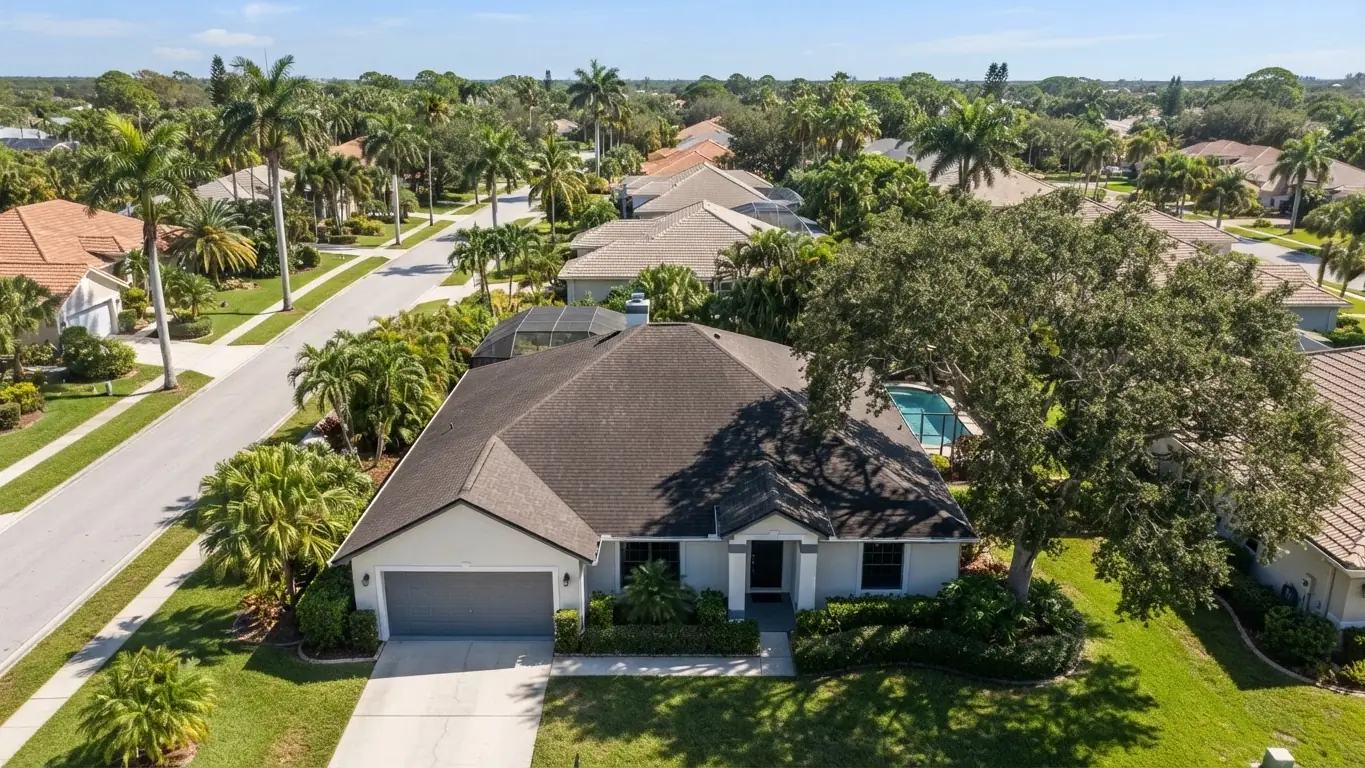
Solar can lower energy costs and add resilience, but not every home is an ideal candidate, and a little honesty up front saves time and money. Here is a clear look at what actually determines whether solar makes sense for your home, and how to find out for sure.
Your roof comes first
Solar starts with the roof, because panels are built to last for decades. You need a sound roof with enough usable surface, the right structural condition, and years of life left in it.
If your roof is aging, it often makes sense to pair a new roof with the solar installation. Doing both together avoids the costly hassle of removing and reinstalling panels when the roof needs replacing a few years later.
Sunlight and orientation
How much energy a system produces depends on how much sun your roof actually receives. South-facing surfaces with minimal shade perform best, but east and west exposures can still work well.
Shading is the bigger concern. Trees, neighboring buildings, or chimneys that block the sun for hours each day reduce output, though they do not always rule solar out, and sometimes trimming or panel placement solves it.
Your energy usage
The more electricity your household uses, the more there is to offset, and generally the faster solar pays back. A home with high year-round AC use, common in Florida, often sees strong results.
Your recent utility bills and usage patterns help size the right system, so you pay for exactly what you need, not more and not less.
Incentives and financing
Cost is not just the sticker price. Qualifying homeowners may be eligible for rebates or incentive programs depending on current eligibility and the programs available at the time.
Renomatix is independent and not affiliated with any government program; we simply help you understand the options that may apply to your situation. Low or no-upfront financing is also often available, so you can go solar without a large payment up front.
What can delay or rule out solar
Some situations make solar a poor fit, at least for now. Being upfront about them saves everyone time:
- A roof that is heavily shaded for most of the day
- A roof near the end of its life that should be replaced first
- Very low electricity usage, which lengthens the payback period
- Structural issues that need to be addressed before installation
In several of these cases solar still works, it just needs a step taken first, like a new roof or tree trimming.
How to find out for sure
The only way to know with certainty is a free, no-obligation assessment of your roof, sunlight, energy usage and goals. Online calculators can only estimate; a real evaluation gives you real numbers.
If solar is a good fit, you will get a clear plan and honest figures. If it is not, you will hear that too, because the goal is the right decision for you, not a sale.